

Your Trusted Restore Wellness Clinic Waco, Texas

Men's Testosterone Therapy Rebuild Your Strength, Drive & Vitality

Low testosterone affects millions of men quietly draining energy, eroding strength, reducing drive, and diminishing quality of life. Physician-supervised Testosterone Replacement Therapy (TRT) at Restore Wellness Clinic in Waco, Texas restores your levels and brings back the man you know yourself to be.

Does This Sound Like You?

40%

Of Men Over 45 Have Low T

1–2%

Annual T Decline After Age 30

100%

Lab-Guided Protocols

5★

Patient Satisfaction

What Is Testosterone Replacement Therapy?

Testosterone Replacement Therapy (TRT) is a physician-supervised treatment that restores testosterone to an optimal physiological range in men with clinically low levels a condition known as hypogonadism or, informally, “Low T.” It uses bioidentical testosterone, structurally identical to what your body naturally produces.

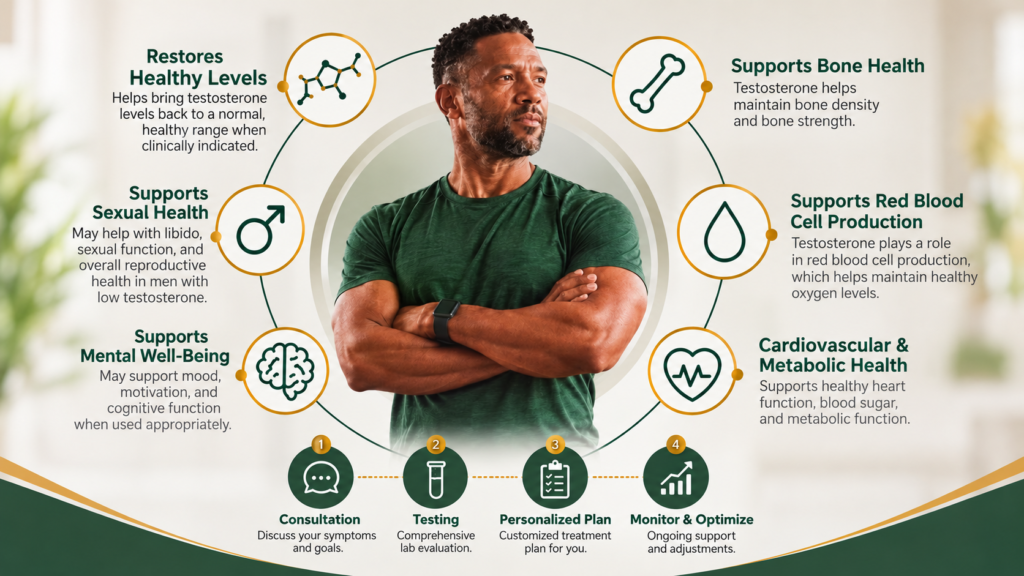
Testosterone isn’t just about sex drive. It governs energy production, muscle protein synthesis, fat metabolism, bone density, red blood cell production, mood regulation, cognitive function, and cardiovascular health. When it declines whether through aging, stress, obesity, or other factors the impact is felt in nearly every area of a man’s life.

Testosterone Decline by Age (Average)
Age 20s
Peak
Age 30s
~85%
Age 40s
~65%
Age 50s
~48%
Age 60s
~32%
*Approximate averages. Individual levels vary. Source: JCEM longitudinal data.

TRT vs. Anabolic Steroids An Important Distinction

Physician-supervised TRT is not the same as anabolic steroid use. TRT restores testosterone to normal physiological levels the goal is optimal health and function, not supraphysiological enhancement. Dosing is calibrated by lab results, monitored regularly, and adjusted to keep you in a healthy therapeutic range.

Recognize Your Symptoms

Signs Your Testosterone Is Too Low

Low testosterone doesn’t announce itself with a single dramatic symptom. It erodes gradually and most men attribute the changes to stress, aging, or “just getting older.” If several of these resonate, a lab test is the only way to know for certain.

Chronic Fatigue & Low Energy

Waking up tired despite sleeping 7–8 hours. Hitting an afternoon wall that feels impossible to push through. Feeling drained by tasks that used to be routine. Testosterone is a primary driver of cellular energy production.

Muscle Loss & Weakness

Losing muscle mass and strength despite consistent training. Recovery taking longer than it used to. Testosterone directly stimulates muscle protein synthesis — without it, muscle maintenance becomes significantly harder.

Increased Body Fat

Accumulating fat — particularly around the chest, abdomen, and hips — despite no significant changes in diet or activity. Low testosterone promotes fat storage and inhibits fat burning, particularly visceral fat.

Brain Fog & Poor Concentration

Mental sharpness that used to be reliable is now inconsistent. Difficulty focusing, slower processing, poor word recall, and a general sense that your mind isn’t operating at its best. Testosterone receptors are abundant in the brain.

Brain Fog & Poor Concentration

Mental sharpness that used to be reliable is now inconsistent. Difficulty focusing, slower processing, poor word recall, and a general sense that your mind isn’t operating at its best. Testosterone receptors are abundant in the brain.

Decreased sexual desire that has gradually declined over months or years. Difficulty achieving or maintaining erections. These are among the most common and most impactful symptoms of low testosterone in men.

Immune Defense photo

Mood Changes & Irritability

Increased irritability, impatience, or emotional flatness. Loss of the motivation and competitive drive that used to come naturally. Depression and low mood are well-documented consequences of testosterone deficiency.

Sleep Disturbances

Difficulty falling or staying asleep, or waking frequently. Sleep apnea is both a cause and consequence of low testosterone. Poor sleep further suppresses testosterone production, creating a destructive cycle.

Testosterone is essential for maintaining bone density in men. Chronically low levels accelerate bone loss, increasing fracture risk over time a less obvious but medically significant consequence of untreated hypogonadism.

Immune Defense photo

Hot Flashes & Sweating (Men)

Less commonly recognized, but hot flashes, night sweats, and temperature dysregulation do occur in men with significantly low testosterone particularly during andropause, the male equivalent of menopause.

The only way to confirm low testosterone is a blood test. If these symptoms resonate, booking a consultation at Restore Wellness Clinic is the first step toward answers and a plan to fix it.

The Process

How TRT Works at Restore Wellness Clinic

A clear, evidence-based 4-step process from your first conversation to feeling the difference with your provider guiding every decision.

Restore wellness clinic treatment

Consultation & Lab Testing

Your provider reviews your symptoms and health history, then orders a comprehensive hormone panel including total and free testosterone, estradiol, LH, FSH, PSA, CBC and a full metabolic panel.

Dermal filler

Lab Review & Protocol Design

Your provider interprets your results in the context of your symptoms and health goals. If TRT is indicated, a personalized protocol is designed selecting the delivery method and dosing optimal for your body.

Begin Treatment

You start your TRT program with clear instructions on administration, expected timelines, and how to reach our team. Most men begin noticing changes in energy and mood within 3–6 weeks.

Body Contouring

Monitor, Retest & Optimize

Labs are repeated at 6–12 weeks to confirm your testosterone is in the optimal range. Regular check-ins and ongoing monitoring ensure your health markers stay in a safe, beneficial range long-term.

Recognize Your Symptoms

Signs Your Testosterone Is Too Low

What Is Clinically Low Testosterone?
Clinical hypogonadism is generally defined as a total testosterone below 300 ng/dL alongside symptoms — though many men experience significant symptoms at levels between 300–450 ng/dL depending on their individual sensitivity and free testosterone levels.
Below 300
Low T
300–600
Borderline
600–1000
Optimal

What TRT Aims to Achieve

NOT This Below 300 ng/dL

Clinically deficient significant symptoms, health risks

Not Just "Normal" — 300–600 ng/dL

Technically in range but often still symptomatic

Optimal 600–1000 ng/dL

Where most men feel their best our target range

Why "Normal" Isn't Good Enough

Lab reference ranges for testosterone are broad a man with 310 ng/dL is technically “in range” alongside a man with 980 ng/dL. But the clinical reality is that many men with levels in the 300–500 ng/dL range experience significant symptoms that respond well to TRT.

At Restore Wellness Clinic, we don’t treat a number we treat a patient. Your provider reviews your total testosterone, free testosterone, SHBG, and estradiol alongside your clinical symptoms to make an individualized recommendation. The goal is the level at which you feel, function, and perform your best.

TRT is not a one-size-fits-all prescription. Your protocol is built around your lab results, your symptom profile, your health history, and your goals.

Muscle & Strength Restoration

Testosterone directly stimulates muscle protein synthesis. Most men on TRT notice meaningful improvements in muscle mass, strength, and gym performance within 3–6 months.

Fat Loss Support

Testosterone inhibits fat cell formation and promotes fat oxidation particularly visceral fat. TRT combined with appropriate lifestyle changes produces meaningful improvements in body composition.

Cardiovascular & Bone Health

Optimal testosterone supports healthy red blood cell production, bone mineral density, lipid metabolism, and cardiovascular function — with long-term health benefits beyond symptom relief.

What to Expect

Your TRT Journey Timeline & Delivery Options

Lab
Before Treatment

Comprehensive Baseline Labs

Full hormone panel including total testosterone, free testosterone, estradiol, LH, FSH, SHBG, PSA, CBC, lipids, and metabolic markers. This is the foundation every protocol is built on..

wk3
Weeks 3-6

First Signs of Improvement

Energy, mood, and motivation typically show the first improvements. Many men report a noticeable shift in how they feel within the first 3–6 weeks particularly in energy levels and mental clarity.

Mo 2
Month 6–12 — First Labs Repeated

Lab Review & Dose Optimization

Testosterone and estradiol are retested to confirm levels are in the optimal therapeutic range. Your provider adjusts dosing as needed based on your numbers and symptom response.

Mo 4
Month 3–6

Body Composition Changes Emerge

Muscle mass and strength improvements become more significant. Body fat begins to redistribute. Libido and sexual function are typically well-restored by this point in the program.

Mo 6
Month 6 & Beyond

Full Benefits Sustained Long-Term

Full body composition, cognitive, and quality-of-life benefits are typically well-established. Ongoing 6-month monitoring continues to ensure your levels and health markers remain in an optimal, safe range.

TRT Delivery Options for Men

Your provider will recommend the delivery method that best suits your lifestyle, preferences, and clinical needs. All options use bioidentical testosterone.

Each method has different absorption profiles, injection frequencies, and maintenance requirements your provider will explain the full picture during your consultation.

Testosterone Injections (Most Common)

Self-administered intramuscular or subcutaneous injections typically given weekly or bi-weekly. Highly effective, cost efficient, and allow precise dosing control. The most commonly prescribed TRT delivery method.

Subcutaneous Pellets

Tiny pellets inserted under the skin every 3–6 months by your provider. Provide steady, consistent hormone delivery without weekly injections a popular choice for men who prefer a low-maintenance approach.

Topical Gels & Creams

Applied daily to the shoulders, upper arms, or inner thighs. Convenient and needle-free. Important to avoid skin-to-skin transfer to partners or children until fully absorbed.

Transdermal Patches

Worn daily on the skin for continuous testosterone delivery. Less commonly used but appropriate for certain patients who prefer a patch system over injections or daily gel application.

Is This Right For You?

Who Is TRT Right For?

Two distinct, specialized programs each designed around the unique hormonal needs and health goals of men respectively.

TRT is most clearly indicated when blood tests show total testosterone below 300 ng/dL alongside clinical symptoms. Diagnosis requires both lab evidence and clinical presentation.

Many men with testosterone in the 300–500 ng/dL range still experience significant symptoms. Free testosterone, SHBG, and clinical context all matter your provider will evaluate the full picture.

Andropause the gradual hormonal decline in aging men is a legitimate medical condition. TRT is highly effective at restoring the vitality, body composition, and drive that gradual testosterone decline erodes.

Men who are gaining fat and losing muscle despite consistent effort particularly if combined with fatigue and low drive  often have underlying hormonal causes that TRT directly addresses.

TRT works best with committed provider oversight regular labs, honest communication about symptom response, and adherence to the recommended protocol. Your commitment is the foundation of success.

Important Contraindications

TRT is not appropriate for all men. Your provider will thoroughly review your medical history before prescribing. TRT is generally not recommended if you have:

Men seeking fertility preservation may be candidates for alternative treatments such as hCG or clomiphene therapy discuss with your provider.

What TRT Delivers

Life With Optimal Testosterone What Changes

The benefits of optimized testosterone extend into every dimension of a man’s daily experience physical, mental and emotional.

Restored Energy & Stamina

The persistent fatigue that has become your baseline begins to lift. Energy levels stabilize throughout the day. Physical stamina improves. Tasks that felt effortful become manageable again and then easy.

Increased Muscle Mass & Strength

Testosterone is the primary anabolic hormone in men. With TRT, muscle protein synthesis increases significantly  most men see meaningful improvements in lean mass and strength within 3–6 months, especially when combined with resistance training.

Reduced Body Fat

Testosterone directly inhibits fat cell formation and promotes fat burning. The stubborn abdominal and chest fat that accumulated as T declined tends to respond well to optimized testosterone levels over time.

Mental Clarity & Cognitive Performance

The brain fog clears. Focus sharpens. Word retrieval becomes easier. Mental processing speed improves. Testosterone receptors are widespread in the brain and their activation profoundly affects cognitive function.

Mental Clarity & Cognitive Performance

The brain fog clears. Focus sharpens. Word retrieval becomes easier. Mental processing speed improves. Testosterone receptors are widespread in the brain — and their activation profoundly affects cognitive function.

Sexual desire returns. Erectile function improves for many men. The connection between optimal testosterone and male sexual health is direct and well-established — and TRT consistently produces meaningful improvements in this area.

Immune Defense photo

Improved Mood & Motivation

The irritability, emotional flatness, and low motivation that accompany low T respond strongly to TRT. Most men describe a return of their natural drive, competitive spirit, and emotional resilience.

Better Sleep Quality

Optimal testosterone supports the hormonal environment for restorative sleep. Many men report significant improvements in sleep depth and duration which in turn amplifies every other benefit of TRT.

Better Sleep Quality

Optimal testosterone supports the hormonal environment for restorative sleep. Many men report significant improvements in sleep depth and duration which in turn amplifies every other benefit of TRT.

Testosterone is essential for maintaining bone mineral density in men. Chronic low T accelerates bone loss TRT halts this process and, over time, can support meaningful recovery of bone health.

Immune Defense photo

Cardiovascular & Metabolic Health

Optimal testosterone supports healthy red blood cell production, insulin sensitivity, lipid metabolism, and cardiac function. Long-term TRT in hypogonadal men is associated with improvements in multiple cardiovascular risk markers.

What Our Clients Say About Us

[trustindex no-registration=google]

Ready to Get Your Drive Back?

Low T is a medical condition with highly effective treatment not something you have to accept as “just getting older.” Our provider will run the labs, review your results, and build a TRT program designed around your body and your goals.

Frequently Asked Questions

What is Testosterone Replacement Therapy and how does it work?

TRT is a physician-supervised treatment that restores testosterone to an optimal physiological range using bioidentical testosterone structurally identical to what your body naturally produces. Your provider first orders a comprehensive blood panel to establish your baseline levels, then designs a personalized protocol to restore them to a range where you feel and function at your best. Labs are monitored regularly throughout treatment to ensure safety and efficacy.

Clinical hypogonadism is generally diagnosed when total testosterone is below 300 ng/dL alongside symptoms. However, many men experience significant symptoms with levels between 300–500 ng/dL particularly if free testosterone is low or SHBG is elevated. Your provider at Restore Wellness Clinic evaluates your complete hormonal picture and clinical presentation together, not just a single number. If your symptoms are consistent with low T and your labs support it, TRT may be appropriate.

Most men notice improvements in energy, mood, and motivation within 3–6 weeks of starting TRT. Libido and sexual function typically improve meaningfully within 3–8 weeks. Significant changes in muscle mass and body composition develop over 3–6 months of consistent treatment. Full benefits are generally experienced after 6–12 months. Individual timelines vary based on starting testosterone levels, delivery method, and program adherence.

Yes TRT suppresses the hypothalamic-pituitary axis, which reduces LH and FSH production and can significantly reduce sperm production. If you are currently trying to conceive or want to preserve fertility, TRT may not be the right approach at this time. Alternatives such as hCG (human chorionic gonadotropin) therapy or clomiphene citrate can raise testosterone while preserving sperm production. Discuss your fertility goals explicitly with your provider at your consultation.

When properly prescribed and monitored, TRT is safe for the majority of eligible men. Known considerations include: polycythemia (increased red blood cell count monitored via CBC), estradiol elevation (managed if needed), testicular volume reduction (from pituitary suppression), and skin reactions at the application site. Prostate health is monitored via PSA testing. Our provider monitors all relevant health markers throughout your program to keep you safe and in the therapeutic range.

Before starting TRT: total testosterone, free testosterone, estradiol, LH, FSH, SHBG, PSA, CBC (complete blood count), lipid panel, comprehensive metabolic panel, and thyroid function. During TRT: testosterone levels, estradiol, hematocrit/hemoglobin (to monitor for polycythemia), PSA, and lipids are retested at 6–12 weeks after starting and then at 6-month intervals. This ongoing monitoring ensures your safety and protocol efficacy throughout treatment.

Yes. Restore Wellness Clinic in Waco, Texas offers physician-supervised Testosterone Replacement Therapy for men with low T. We serve patients in Waco and throughout Central Texas. All appointments are booked through our secure Tebra patient portal submit your information on this page and our team will contact you within 24 hours.

Absolutely and the combination is often highly synergistic. Low testosterone contributes to fat accumulation and muscle loss, making weight loss harder. Optimizing testosterone alongside a medical weight loss program (Tirzepatide or Semaglutide) addresses the hormonal and metabolic causes of weight gain simultaneously. Many of our patients pursue both programs concurrently with excellent results. Your provider will coordinate a comprehensive plan tailored to your goals.

Our Location in Waco Texas

Visit our Restore Wellness Clinic for personalized care and wellness services. Our team is here to support your health journey in a comfortable and welcoming environment.

Restore Wellness Clinic

Begin Your Personalized Consultation

No obligation. We’ll reach out within 24 hours to confirm your appointment.

Stop Settling for Less Than You're Capable Of

Low testosterone is a medical condition not a personality trait, not laziness, and not inevitable. With physician supervision, a lab-guided protocol, and the right treatment, the energy, strength and drive you remember are within reach. Restore Wellness Clinic in Waco, Texas is ready to help.